The fair and its coins
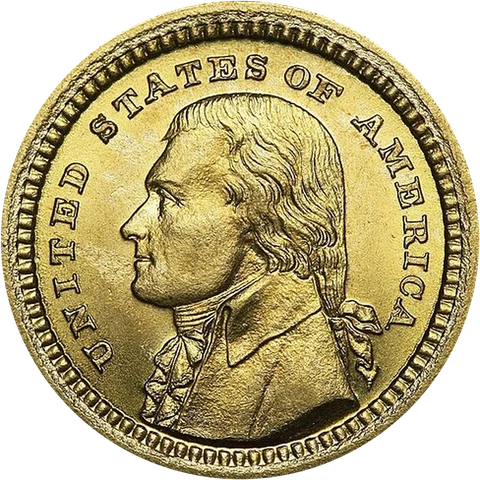
The Louisiana Purchase Exposition opened in Forest Park in 1904, a year later than planned, to mark a century since the purchase. To help pay for it, Congress authorized commemorative gold dollars. The Mint struck them in 1903 with two designs: one showing Thomas Jefferson and one showing William McKinley.
Sales were slow, and most of the coins were later melted. The ones that survived are popular with collectors, and St. Louis families hold more of them than most.
What sets the price of a gold dollar
These coins are tiny, holding less than a twentieth of an ounce of gold, so the gold is a small part of their value. Condition is nearly everything. Coins that were handled, cleaned or mounted in jewelry sell for much less than original uncirculated coins.
Coins in PCGS or NGC holders are priced on their certified grade. Raw coins are priced on our look at the surfaces and wear.
Souvenir medals and so-called dollars
The fair produced a flood of souvenirs: bronze, brass, aluminum and silver medals, official award medals, elongated coins and dollar-sized tokens collectors call so-called dollars. Most were sold cheaply as keepsakes and survive in large numbers.
- Common aluminum and brass souvenirs: modest value
- Official award medals: more, especially with boxes
- Silver medals: at least their silver value
- Scarce so-called dollars in good condition: real collector demand
Before you sell
Keep any boxes, ribbons, cards or envelopes with the piece. Do not clean or polish anything. If you have several fair items, bring them all, since collectors sometimes pay more for groups.
Quick answers
Is a 1904 World's Fair medal gold?
Most are bronze, brass or aluminum. A few are silver. We test anything unclear.
Which gold dollar is worth more, Jefferson or McKinley?
Prices for both are similar. Condition matters far more than design.
Ready to sell? See gold coins with St. Louis Coin Buyers.