- Home
- What we buy
- Old paper money
Selling old paper money in St. Louis
Old bills turn up in books, Bibles, wallets and safes. We check each note's type, series, serial number and condition and price it on current collector demand.
Monday to Friday, 9am to 5pm, by appointment.
Rather we call you?
Leave your name and number and we will call you back the same business day.
Or call (314) 891-0078
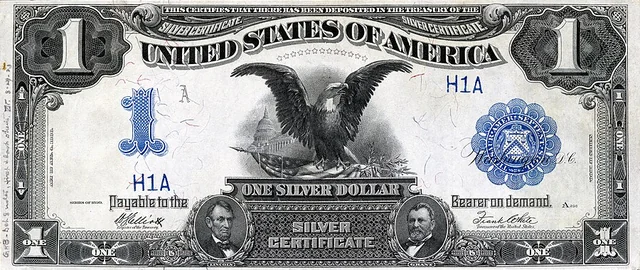
Paper money we buy
- Blue seal silver certificates
- Red seal United States notes
- Gold certificates
- Large size notes printed before 1929
- National bank notes from St. Louis and Missouri banks
- Star notes and fancy serial numbers
- Fractional currency
- Confederate and Southern state notes
How we price paper money
A note's value depends on its type, series, signatures, serial number and condition. A worn silver certificate from the 1950s sells for a little over face. A crisp large size note or a national bank note from a scarce bank can sell for many times face.
We look at each note under good light, check it against recent sales and write down what we would pay.
National bank notes from St. Louis
From 1863 to 1935, banks across the country printed their own currency with the bank's name and city on the face. St. Louis had many national banks during those years, and notes from some of them are scarce today. Collectors pay premiums for specific banks and towns.
If you find a note that says St. Louis, or any Missouri town, on the front, keep it flat and bring it in. We research the issuing bank and price the note on how scarce and how clean it is.
Types of old U.S. notes
Old American paper money comes in more types than most people expect. The seal color and the words across the top are the quickest way to tell them apart.
- Silver certificates: blue seal, Silver Certificate across the top
- United States notes: red seal, often two and five dollar bills
- Gold certificates: gold seal, recalled in 1933
- Federal Reserve notes: green seal, the modern type
- Large size notes: bigger bills printed before 1929
- National bank notes: a local bank's name printed on the face
Star notes and serial numbers
A star next to the serial number means the note replaced a misprinted one, and star notes are scarcer than regular notes of the same series. Very low serial numbers, solid numbers like 77777777 and ladders like 12345678 also attract collectors. We check every note for these.
Condition and handling
Folds, tears, stains, pinholes and missing corners all lower a note's value. Crisp notes with sharp corners bring the most. Please do not flatten, iron, tape or wash old notes. Keep them in whatever book or envelope they were found in and bring them that way.
Confederate and Southern notes
Missouri was a border state, and Confederate notes do turn up in St. Louis families. Many are common, and many more are later reproductions made as souvenirs. Genuine notes in decent condition still carry collector value. We examine the paper, printing and serial numbers and tell you what we find.
Notes mixed with coins
Paper money often shows up tucked into coin albums, wallets and envelopes in a safe. Bring it all together. We price coins and notes at the same appointment, so there is no need for a separate currency dealer.
Related reading: How to sell a coin collection in St. Louis
Old paper money: questions
Are two dollar bills worth anything?
Most modern ones are face value. Red seal twos and the big pre-1929 twos are a different story and can be worth more.
Should I flatten or tape old notes?
No. Bring them as they are. Tape and pressing can lower the value.
Are silver certificates still redeemable for silver?
No. That ended in 1968. They are worth face value or more as collectibles.
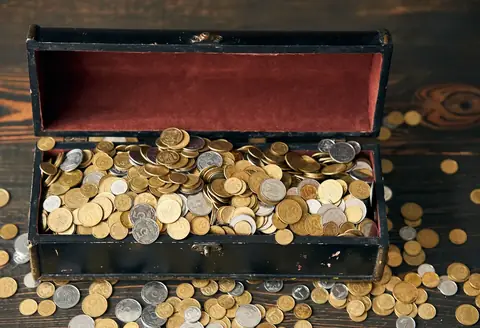 Inherited collections
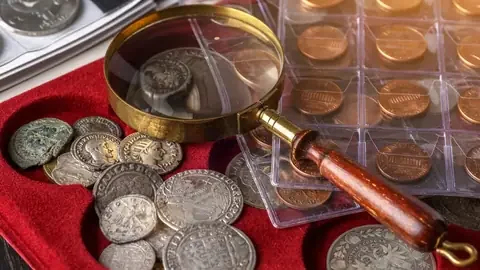 Old coins
Find out what your coins and old money are worth
Call for a free private appraisal anywhere in the St. Louis area. Every coin, bill and piece of gold is checked where you can watch, and the offer is written down.